Biscayne Park Has No Downtown. This Fall, a Free Ride Is Standing In For One.
September 10, 2026
September 10, 2026
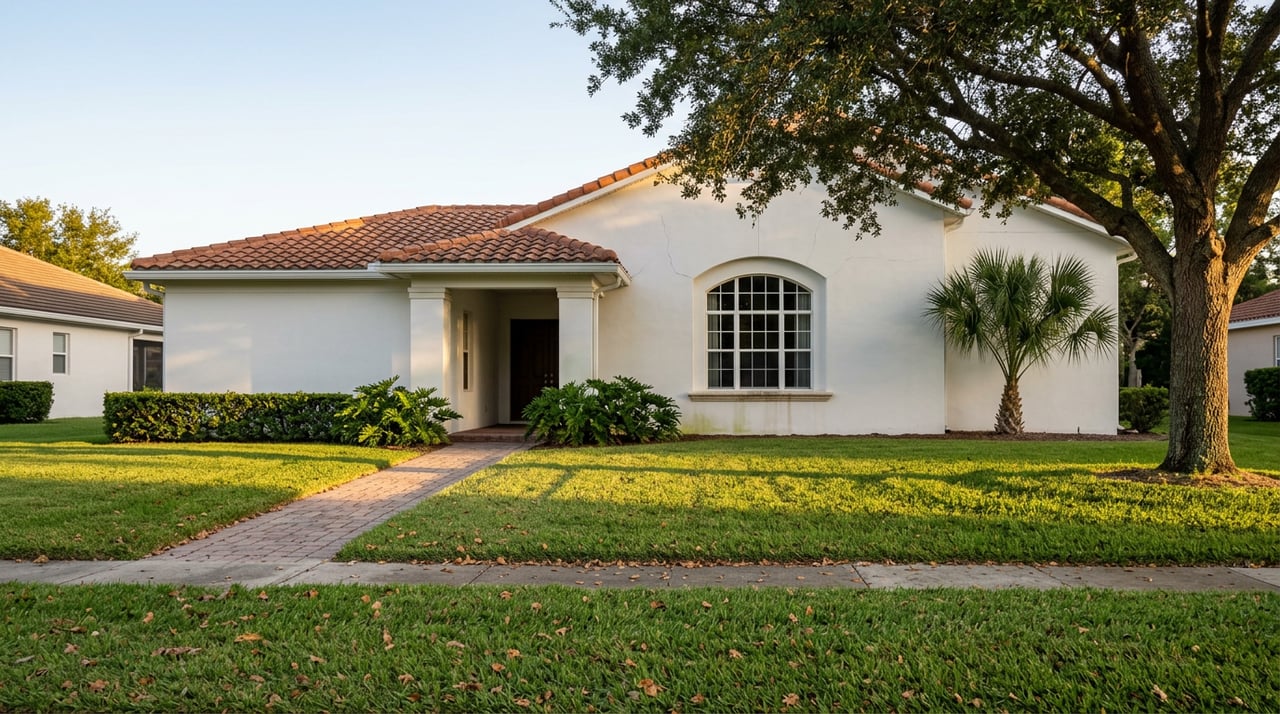
Walk any street in Biscayne Park and you will not pass a coffee shop, a corner store, or a single restaurant. That is not an oversight of a village that never got around to building one. It is the plan working exactly as designed, and this fall the village found an unusual way to work around its own blueprint without changing it.
The fix did not come from a zoning change or a new commercial permit. It came from a fleet of electric cars that cost nothing to ride.
Biscayne Park started as Arthur Griffing's tomato fields in the early 1920s, land the horticulturalist later filled with tree nurseries and groves before subdividing it into home lots. When the 113 residents who lived there voted to incorporate as their own town in December 1931, and again when the Florida Legislature made it a village in 1933, what they were formalizing was already strictly residential. No commercial parcels were carved in. The only public building that came out of that era is the Log Cabin, built by WPA labor in 1933 for a total cost of $247, funded by resident donations ranging from five to twenty dollars apiece.
That single building, now known as the Ed Burke Recreation Center, is still the closest thing the village has to a town square. Everything else inside the village's diamond-shaped 0.6 square miles, bordered by the Biscayne Canal on the southwest and the Florida East Coast Railway on the southeast, is a house.
That design has a practical consequence residents have lived with for close to a century: nothing you need on a Tuesday is actually inside the village. Groceries, pharmacies, and the closest medical care sit just across Biscayne Boulevard or down NE 2nd Avenue in North Miami, El Portal, and Miami Shores. I-95 is roughly ten minutes west for anyone heading further. Because there was never a bus line or trolley built to serve a village this size, getting to any of it has meant getting in a car.
That has been true since the Log Cabin opened its doors. It is still true today. What changed is who is doing the driving.
The Village of Biscayne Park now shows up on Freebee's list of active service areas, the same on-demand electric ride network that has expanded to 40 municipalities across Florida according to reporting on the program's growth in Key Biscayne. The village's own announcement of the partnership is direct about what it offers: "FREE on-demand rides to several local destinations," open to all ages, with pets welcome onboard.
The Biscayne Park zone runs on a split schedule rather than all day, every day:
| Days | Hours |
|---|---|
| Sunday through Thursday | 12:00 p.m. to 3:15 p.m. and 4:00 p.m. to 7:00 p.m. |
| Friday and Saturday | 11:00 a.m. to 4:15 p.m. and 5:00 p.m. to 9:00 p.m. |
Requests have to come in at least 30 minutes before the window closes, and the vehicles themselves are fully electric, a detail the village points to as part of its broader environmental efforts. None of this replaces a car for someone commuting daily to downtown Miami. What it replaces is the specific, smaller trip: the pharmacy run, the ride to a neighbor's porch two streets over when the summer heat makes walking unappealing, the drop-off at a Miami Shores restaurant without circling for parking.
That is a modest fix for a village of under 1,400 homes. It is also the first time in Biscayne Park's history that getting to a store or a doctor's office hasn't required owning the trip yourself, start to finish.
Freebee is not an isolated addition. It landed on the village's homepage this season alongside three other line items: NNO 2026, the annual National Night Out event where police and residents share a block together, Tree Plantings 2026, the latest round of a canopy-stewardship effort in a village whose tree cover was planted deliberately by Griffing a century ago and is now maintained as a matter of policy, and Tunes for Tots, one of several ongoing Recreation Department programs that also include Music Classes, Soccer, and Zumba, all held at the Log Cabin.
Look at what those four things have in common. None of them are a store opening. None of them require a commercial permit. Each one is the village building shared life entirely out of its own civic infrastructure, its parks, its one recreation building, its police department, its tree program, because that infrastructure is the only kind a strictly residential village was ever built to have.
Biscayne Park is also a designated bird sanctuary, a status that predates most of the residents currently living there and one the village treats as inseparable from its identity. Griffing Park and Biscayne Shores & Gardens Park round out the short list of green spaces where residents actually gather outdoors. There is no fifth park with a coffee stand attached, because that was never the design.
A village that solves for community through parks, tree programs, and a single recreation center, rather than through shops and restaurants, is a village that will keep solving future problems the same way. Freebee did not require Biscayne Park to rezone a single lot or add a business license. It required a partnership agreement and an app download. That is the same low-friction, no-new-construction approach the village has used for its tree plantings, its recreation classes, and its National Night Out block parties for years.
For a resident, the practical takeaway is simple: check the Freebee app's operating windows before you plan an errand, because the free ride runs on a schedule, not around the clock. For anyone who has always assumed Biscayne Park's lack of a Main Street was a gap waiting to be filled, the more accurate read is that the village has spent a century filling that gap with everything except a Main Street, and this fall's shuttle partnership is simply the newest version of that same habit.
If you're weighing what a village like this actually offers day to day, on the ground, that pattern is worth knowing before you draw conclusions from a map. I track these kinds of local shifts closely because they tell you more about how a place actually functions than a listing photo ever will. If you have questions about Biscayne Park or any of the neighborhoods nearby, reach out through Eric Edward Exhibits and we can talk through what you're seeing.
Stay up to date on the latest real estate trends.
Eric Periu
Primary phone
Address
20803 Biscayne Blvd
Aventura FL 33180