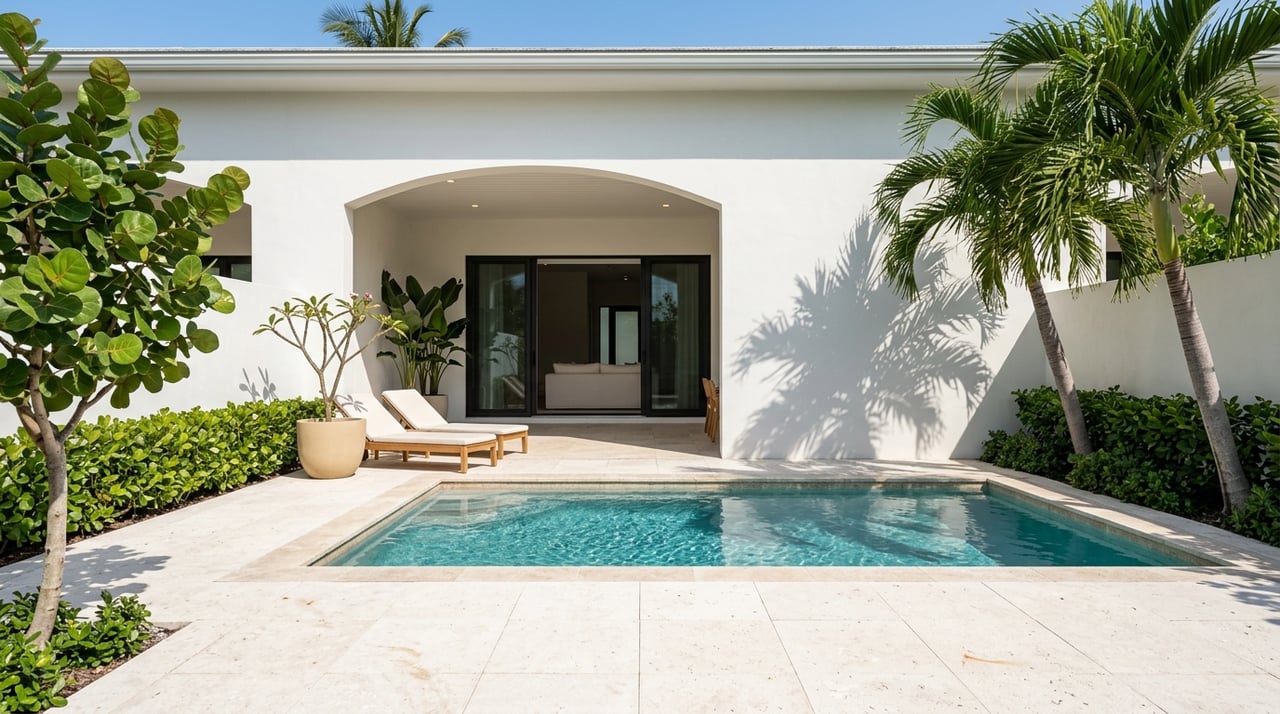
Florida Keys Second Home Investment or Personal Retreat?
June 18, 2026
June 18, 2026
Are you looking at a Florida Keys home and wondering whether it should be your personal getaway or part of your investment strategy? That question matters more in Key West than many buyers expect, because how you plan to use a property can affect zoning, taxes, licensing, and your long-term costs. If you are considering a purchase in 33040, this guide will help you compare the tradeoffs and focus on the details that should shape your decision. Let’s dive in.
In many markets, buyers start with the property type. In Key West, it often makes more sense to start with the intended use. The same home might work well as a second home, a long-term rental, or a short-stay property, but only if local rules allow that use.
That matters because Key West is not a fast, low-cost market where you can easily change course later. Redfin reported a March 2026 median sale price of $1.165 million, a median of 126 days on market, and a 93.4% sale-to-list ratio. In a market at this price point, your buying plan needs to be clear from the start.
Key West remains expensive, and the pace of the market suggests buyers should be patient and selective. Higher purchase prices can make it harder for a property to produce strong rental returns, especially if you are relying on long-term rent alone.
At the same time, Monroe County serves about 84,000 residents and nearly 4 million visitors a year. Hotel performance in the Florida Keys also shows a seasonal pattern, with fiscal-year-to-date occupancy at 69.7% and average daily rate at $341, while January 2026 occupancy reached 79.6% with an average daily rate of $374. That seasonal visitor demand is one reason buyers often explore vacation-rental potential, but demand alone does not override local rules.
A second home usually fits best when your main goal is personal use. If you want a place for weekends, seasonal stays, or a long-term hold that supports your lifestyle first, this path can be simpler than trying to force an income strategy that may not fit the property.
In Key West, that simplicity matters. If you are not depending on transient rental income, you may avoid much of the licensing, tax, and compliance complexity tied to shorter stays. You can focus more on location, layout, maintenance needs, and resale flexibility.
That said, a second home is not the same as a primary residence. Monroe County’s property appraiser notes that Florida homestead benefits apply to a property used as your primary residence, not a second home. If the property is not your primary residence, you generally should not expect the homestead exemption or the Save Our Homes assessment cap.
An investment property can work in the Florida Keys, but the numbers and legal use have to line up. Before you buy, you need to know whether the property can legally support the rental plan you have in mind.
That starts with a simple question: Will you rent long term, short term, or seasonally? Each path can lead to different rules, taxes, and operating costs. In a market like 33040, the answer can have a major effect on your expected returns.
If you are focused on long-term rental income, cash flow may be tighter than some buyers expect. HUD’s FY2026 Small Area Fair Market Rent schedule shows 33040 at $2,470 for a 1-bedroom and $2,800 for a 2-bedroom. Using the 2-bedroom benchmark against Redfin’s March 2026 median sale price implies a gross-rent ratio of about 2.9% before taxes, insurance, vacancy, repairs, financing, and management.
That does not mean investment property is off the table. It does mean you should underwrite conservatively. In many cases, the deal only becomes more compelling if the property has legally permitted use that supports premium seasonal or transient revenue.
This is where many buyers need to slow down. In Key West city limits, transient rental use is only allowed in HRCC-1, HRCC-3, HCT, HNC-1, and HNC-3 zoning districts.
The city also states that very few historic-district zoning districts allow transient use. On top of that, the city says a cap on new transient licenses makes conversion of a residential property to transient use very difficult, if not impossible.
The city defines transient lodging as stays of less than 30 days or one calendar month, or even advertising a property as transient lodging. That means your use is not judged only by what happens after closing. Marketing the property for short stays can also trigger the rules.
If the property is in unincorporated Monroe County rather than within Key West city limits, the rules are different but still strict. The county requires an annual special vacation rental permit for each unit before it can be rented as a vacation rental.
The county also requires a special vacation rental manager license. County code treats vacation rentals as tenancies of less than 28 days and requires advertising to show a 28-day minimum stay in areas where vacation rentals are not allowed.
This is why I always look at use rights early in the search. In the Keys, a property’s income potential is not just about bedrooms or curb appeal. It is about whether the zoning, permit status, and operating rules match your actual plan.
Carrying costs in the Keys can change the math fast. Monroe County’s 2025 final tax-rate sheet shows a Key West parcel total of 8.2250 mills, or about $822.50 per $100,000 of taxable value before exemptions and special assessments.
Non-ad valorem assessments can also be added on top of ad valorem taxes. The property appraiser notes these can include charges for items such as stormwater, solid waste, security, sewer, and fire and rescue. Those costs should be part of your budget from day one.
If you plan to rent for short stays in Monroe County, taxes rise again. The Tourist Development Tax is 5% of gross rental revenue and is added to the 7.5% Florida sales tax, for a combined 12.5% lodging tax on transient accommodations.
The county tax collector also states that online platforms such as Airbnb and VRBO do not remit the tourist tax for the owner. Rental properties also require a local business tax. By contrast, a bona fide written lease longer than six months is exempt from the tourist tax.
In coastal Monroe County, insurance is not a side note. FEMA says flood-insurance requirements apply in Special Flood Hazard Areas, and federally backed mortgages require flood insurance in those zones.
For buyers, that means flood exposure needs to be part of the purchase decision, not an afterthought. A home that looks attractive on price alone may become less appealing once insurance and other carrying costs are fully understood.
Here is the practical difference many buyers miss: a second home decision is often driven by lifestyle, while an investment property decision is driven by legal use and operating math. In Key West, those two paths can overlap, but they should not be confused.
A blended-use plan can work in some cases. You might use the property personally for part of the year and rent it during other periods. Still, that approach only makes sense if the property’s zoning, license status, tax obligations, and carrying costs support it from the start.
Before you make an offer in 33040, ask these questions clearly and in order:
These questions can help you avoid the most common mismatch in the Keys: buying a property that fits your vision but not the rules.
If your main goal is to enjoy the property yourself, a second home often makes the most sense in Key West. You can prioritize the experience of ownership and resale flexibility without building your plan around short-stay revenue that may be hard to achieve legally.
If your main goal is income, treat the purchase like a use-rights and cost-analysis exercise first. The best-looking property is not always the best investment if zoning, permits, taxes, insurance, and assessments limit what you can do with it.
I believe buyers do best here when they separate emotion from underwriting. In a high-priced, highly regulated coastal market, clarity on use is just as important as price.
If you are weighing a Florida Keys purchase and want a clear, data-driven strategy, I can help you think through the use case, carrying costs, and property fit before you move forward. When you are ready, schedule a consultation with Eric Edward Exhibits.
Stay up to date on the latest real estate trends.


Eric Periu
Primary phone
Address
20803 Biscayne Blvd
Aventura FL 33180