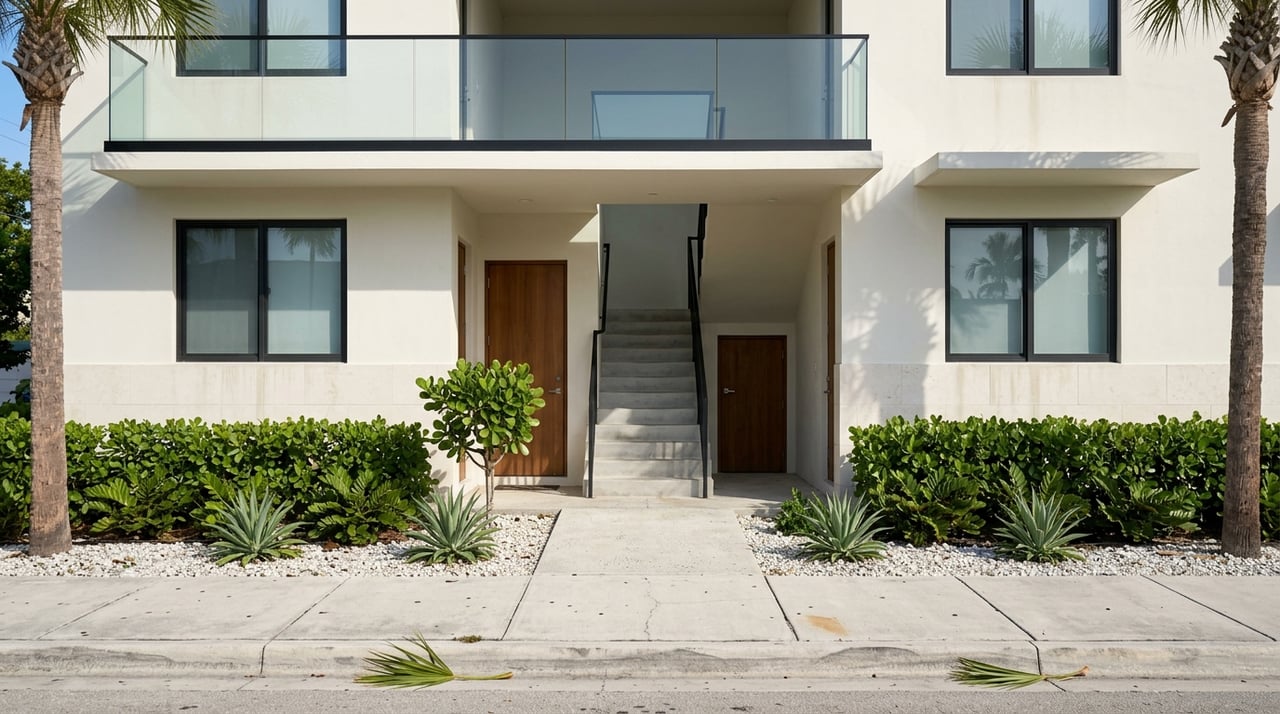
A Smart Guide to Hollywood Small Multifamily Investing
May 14, 2026
May 14, 2026
Thinking about buying a duplex, fourplex, or small apartment building in Hollywood? You are looking at a market with real rental demand, a meaningful base of small multifamily inventory, and enough local quirks to reward careful underwriting. If you want to invest with more confidence, this guide will help you understand where small multifamily fits in Hollywood, what rent and expense numbers to watch, and where value-add can make the biggest difference. Let’s dive in.
Hollywood is not a fringe multifamily market in Broward County. The city’s 2024-2028 Consolidated Plan counts 6,787 two-to-four-unit properties, which equals 9% of all residential properties, plus 8,722 five-to-19-unit properties, or 12%. That tells you small and mid-sized rental housing already plays a meaningful role in the local housing stock.
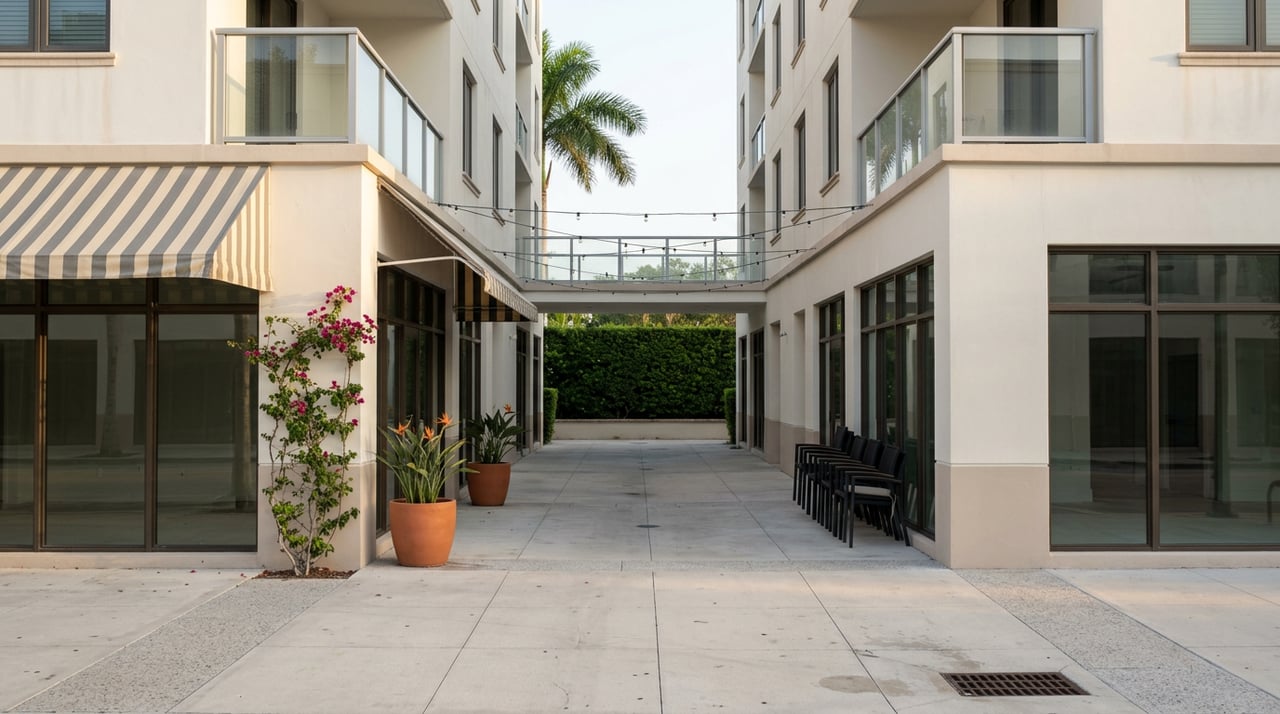
There is also a split market inside the city. Downtown Hollywood has added newer multifamily inventory, with about 5,839 units and average rents around $2,444 per unit in the city’s FY2026 Q2 Market Vitality Report. That newer product sits in a very different lane than an older east-Hollywood duplex or courtyard building, so your underwriting should reflect that from day one.
Hollywood’s Future Land Use plan makes room for lower-density multifamily in several categories. LRES allows single-family homes, duplexes, and townhomes, while LMRES allows cottage courts, duplexes, townhomes, and small apartments. MRES expands into townhomes and low-rise multifamily, typically in the two- to three-story range.
That said, broad land use categories do not override parcel-level rules. The city notes that actual zoning and land development regulations still control what can be built on a specific site. For investors, that means you should treat redevelopment potential and existing legal use as separate questions.
In practical terms, most Hollywood small multifamily opportunities fall into three buckets:
These are not interchangeable. A renovated fourplex with legacy rents, separate meters, and deferred maintenance is a very different investment from a newer downtown asset with higher rents and a lower cap rate profile.
Rent data in Hollywood varies depending on the source, so it is smarter to underwrite a range instead of a single market rent number. As of May 2026, Apartments.com shows average rent in Hollywood at $1,768 per month, with about $1,768 for a one-bedroom and $2,462 for a two-bedroom. Zumper places the citywide average higher at $2,050, with one-bedrooms around $1,750 and two-bedrooms around $2,400.
For most investors, the practical takeaway is simple: a reasonable market band for one- and two-bedroom units is roughly $1,750 to $2,460, depending on location, condition, and finish level. If you are evaluating an older property, this range gives you a better stress test than a single average pulled from one listing site.
Hollywood tends to rent below Fort Lauderdale and around the middle of nearby Broward submarkets. Current Apartments.com data shows average rent at $2,276 in Fort Lauderdale, $1,941 in Hallandale Beach, $1,805 in Pompano Beach, and $1,740 in Deerfield Beach. That puts Hollywood below Fort Lauderdale and roughly between Pompano Beach and Hallandale Beach on current asking rents.
Older official metro data points in the same direction. In early 2024, HUD market-area reporting placed the Hollywood-Dania Beach area at $1,972 average rent, among the lower-rent submarkets in the Fort Lauderdale-Pompano Beach-Deerfield Beach metro. Metro apartment vacancy was 5.4% and asking rents averaged $2,279, which reinforces the idea that Hollywood often trades at a discount to Broward’s strongest rental corridors.
One of the biggest underwriting mistakes in Hollywood is focusing too much on rent upside and not enough on taxes, utilities, and compliance costs. In this market, expense discipline matters.
Hollywood’s November 2025 utility schedule lists multifamily base water at $7.09 per unit per month and wastewater at $7.10 per unit per month. Stormwater is $22.00 per ERU per month, and the city lists a $47.00 monthly sanitation fee. These may look like small line items at first, but they stack quickly across multiple units.
Hollywood’s tax burden is also worth close attention. Broward County’s 2025 proposed millage table shows Hollywood total real-property millage at 22.0838 mills in the north hospital district and 20.9221 mills in the south hospital district. For comparison, Fort Lauderdale is listed at 18.4545 mills, Pompano Beach at 20.2916, Deerfield Beach at 20.2775, and Hallandale Beach at 20.6879.
On a $1 million taxable value, that works out to about $22,084 in Hollywood’s north hospital district versus about $18,455 in Fort Lauderdale. That gap matters. If your purchase basis is not attractive, higher taxes can eat into your cash flow fast.
Hollywood treats rental activity as a regulated business use, which means ownership comes with local administrative steps. The city says owners of leased or rented single-family residential housing must obtain a local business tax receipt. Its lodging category also includes temporary or long-term residential accommodations such as single-family homes, duplexes, and individual rooms.
The city also requires a Certificate of Use for rental of apartment units. The processing fee is $250, non-refundable, and the Certificate of Use is valid for 180 days. If you are buying a small apartment building, this is not a line item to discover after closing.
If you are looking at an older asset, building age can have a major impact on your reserve budget. Hollywood’s 40-year recertification process requires sealed structural and electrical reports from a Florida-registered architect or engineer, a $300 submittal fee, and completion of permitted repairs identified in the reports within 180 days.
That does not mean every older property is a bad investment. It does mean your inspection and due diligence process should be more detailed, especially when the business plan depends on a tight rehab budget or quick stabilization.
Hollywood participates in the National Flood Insurance Program and is a Class 6 CRS community. Eligible NFIP policyholders can receive a 20% discount on flood insurance premiums. For investors, that is helpful, but it is still important to budget carefully for flood-related insurance costs and not assume they will be minor.
When I look at small multifamily opportunities, I want the math to stay simple and realistic. Start with gross scheduled rent, subtract vacancy and credit loss, add any other income, and then deduct operating expenses to reach NOI. From there, you can test debt service coverage and compare your expected return against nearby Broward alternatives.
In Hollywood, I would keep the framework focused on three areas:
This matters because Hollywood often offers lower asking rents than Fort Lauderdale while carrying millage that is not lower. In other words, returns often depend more on buying well and operating well than on hoping the market does all the work for you.
In many Hollywood small multifamily deals, the strongest upside is operational. That can include resetting rents to current market, improving management, tightening expense controls, and renovating units to better compete with newer product.
The rent spread between downtown and the broader city helps explain why this strategy can work. Downtown Hollywood’s average rent of about $2,444 per unit sits well above citywide listing averages in the roughly $1,768 to $2,050 range. If you own a well-located older property and improve it thoughtfully, there may be room to push rents closer to the upper end of the local market band.
For duplexes, triplexes, and fourplexes, common value-add opportunities often include:
The key is staying disciplined. A small building can produce strong returns, but only if your renovation scope, tax assumptions, and lease-up plan make sense together.
Before you write an offer in Hollywood, it helps to pressure-test the deal from several angles. Rent upside is important, but it should not be the only story.
Here is a simple checklist to use:
If the numbers still work after that review, you are looking at a much stronger opportunity.
Hollywood can be a smart market for small multifamily investors who stay selective. The city has a real base of duplexes, fourplexes, and small apartment properties, rents that can support value-add strategies, and enough variation by product type to create opportunity for disciplined buyers. In my view, the best results here usually come from careful underwriting, close attention to local expenses and compliance, and a clear plan to improve operations after closing.
If you want a second set of eyes on a Hollywood duplex, fourplex, or small apartment deal, I can help you evaluate the numbers, compare local options, and move quickly when the right opportunity appears. Schedule a free consultation with Eric Edward Exhibits.
Stay up to date on the latest real estate trends.

Eric Periu
Primary phone
Address
20803 Biscayne Blvd
Aventura FL 33180