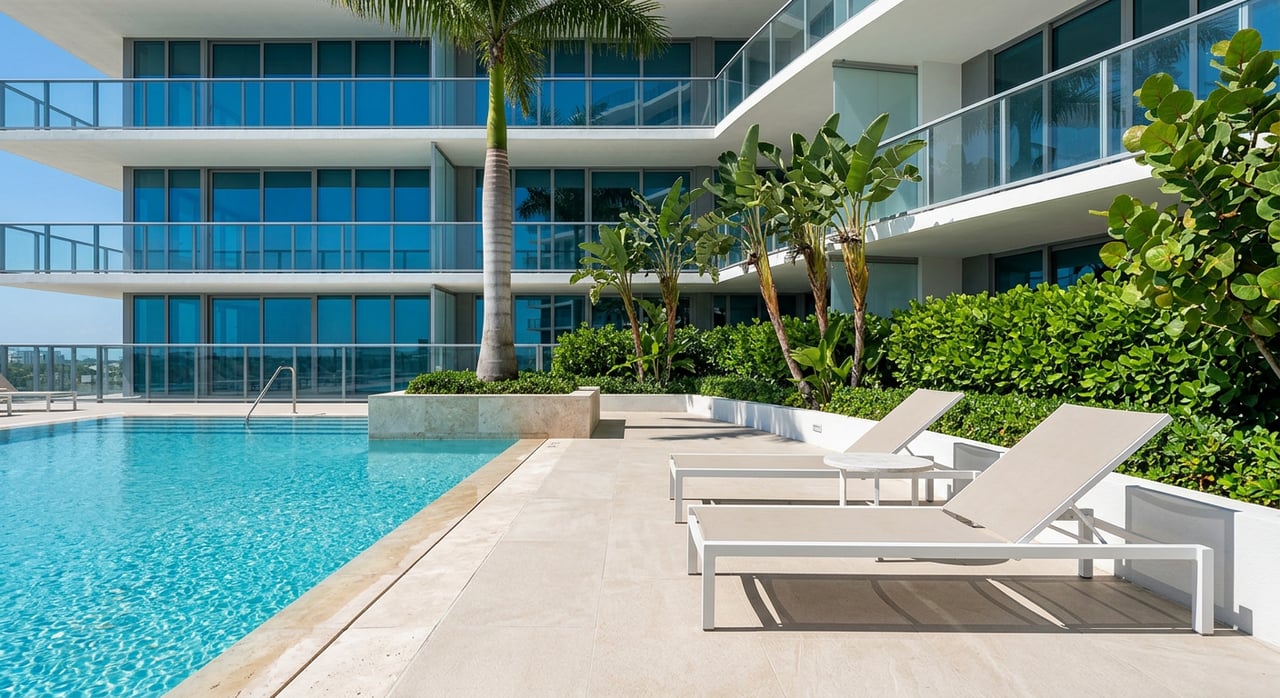
Selling a Condo in Miami: Preparation & Marketing
March 24, 2026
March 24, 2026
Thinking about selling your Miami condo but not sure where to start? You are not alone. Between association requirements, building inspections and getting the marketing right, there are a lot of moving parts that can affect your timeline and price. In this guide, you will get a step-by-step prep plan, the condo documents to line up early, and a Miami-specific marketing strategy that reaches local and remote buyers with impact. Let’s dive in.
If you plan well, you can shorten time on market and protect your bottom line. In Miami-Dade, condos recently sold for a median of about 92.5% of the original list price, and typical time to contract varies by price tier. As of January 2026, mid-range units saw around 62 days to contract, while lower tiers trended closer to 96 days. You can review the latest month-by-month detail in the MIAMI REALTORS monthly tables for townhouses and condos to set realistic expectations before you list. See the current Miami-Dade detail.
Miami buyer traffic often peaks in late winter through spring when out-of-state and international buyers are active. If you can, prepare during slower months and go live just ahead of peak demand. If you need to list off-season, lean on sharper pricing, standout photos and 3D tours, and targeted digital ads to keep activity strong.
Selling a condo in Miami is part real estate and part association logistics. Get these items handled upfront to avoid delays and last-minute renegotiations.
Florida requires milestone structural inspections for buildings that are 3 stories or higher. The first inspection is due when the building reaches 30 years of age, or 25 years if it is within 3 miles of the coastline, and then every 10 years after that. Confirm your building’s age, whether an inspection is due or recently completed, and what the findings require. These items can affect buyer confidence, financing and closing timelines. Review the state rules in Florida Statutes §553.899. Learn about milestone inspections.
Florida’s Condominium Act requires structural integrity reserve studies for buildings 3 stories or higher. Associations must complete and distribute these studies to owners and follow specific disclosure rules. If required documents are not provided to a buyer on time, many contracts include a period when the buyer can cancel. Before you list, confirm that your association has current studies and is providing the required summaries. See Florida Statutes, Chapter 718 for details. Review Chapter 718 requirements.
You will need an association estoppel certificate for closing. Order it early to confirm balances due, special assessments, approval requirements, rental rules, and parking or storage details. Florida law sets what the estoppel must include, caps certain fees, and defines delivery timelines and effective periods. Associations that do not deliver within 10 business days may forfeit the estoppel fee. Confirm your building’s process and expected turnaround so you can keep your contract on track. Read the estoppel rules in Chapter 718.
Use this simple timeline to stay ahead of buyers and inspectors.
Focus on items that can trigger financing issues or price drops during inspections. Service the HVAC and check humidity levels. Address any ceiling or wall stains and reseal balcony doors. If your unit includes a balcony under owner control, verify railings and surfaces are in good order. Where building-level work is underway, gather written updates from the association so buyers know what to expect.
You get one chance to make a first impression online. These presentation investments consistently improve engagement and speed.
The National Association of REALTORS reports that many agents see staging reduce time on market, and some see modest offer increases in the 1–5% range. Use staging to stand out in competitive price bands or when your unit has tricky room sizes. Small condos can often be staged for about $1,000 to $6,000 for a limited period, depending on scope and whether the home is vacant. Review the NAR findings to decide what fits your situation. See NAR’s Profile of Home Staging.
Quality photography and a complete photo set drive more clicks and stronger first impressions. Research on listing information shows that better visuals reduce uncertainty and can improve both buyer interest and time on market. Budget roughly $150 to $500 for pro real estate photos, with add-ons for twilight and drone shots when views matter. Explore research on listing information and outcomes.
Peer-reviewed studies find that virtual and 3D tours can shorten time on market and improve buyer confidence, which matters in Miami where many buyers shop from out of state or abroad. Platform providers also report stronger engagement and faster sales when listings include interactive tours. Expect to invest about $200 to $600+ for a Matterport-style scan depending on unit size and features. Review the academic and industry evidence to decide the right mix for your condo. See a peer‑reviewed study on virtual tours. Read another academic analysis. View Matterport’s industry findings.
You want maximum qualified exposure without wasted time. Here is how to do it.
The MLS is your main distribution engine. A complete, live MLS listing pushes your condo to brokerage sites and major consumer portals for broad reach. You can delay public distribution in some MLSs, but that trades away early exposure during the delay. If you want maximum momentum, list with a full photo package, floorplan and a 3D tour. For details on delayed distribution policies, review local MLS guidance. See Stellar MLS guidance on delayed distribution.
Miami buyers include locals, domestic relocations and international purchasers. That mix calls for a dual strategy: strong MLS syndication plus digital campaigns that reach remote and affluent audiences. Use a dedicated property website, interactive 3D tour, targeted paid social and YouTube ads, and broker-to-broker email. For luxury and waterfront condos, add public relations outreach and targeted international exposure when the budget supports it.
You deserve more than a sign and a listing page. I pair boutique, full-time advisory with professional presentation: a polished Luxury Presence property website, a PropertyPanorama virtual tour, complete MLS distribution through United Realty Group, and targeted digital ads that drive qualified traffic. You get clear communication, strong negotiation and a coordinated team focused on execution.
Track showings per week, online views and 3D tour completions, qualified inquiries, days on market, list-to-sale price and price reductions. Benchmark your unit against the latest MIAMI REALTORS monthly tables for your submarket and price tier so you can adjust quickly. Use the monthly Miami‑Dade detail for benchmarks.
Call early if your building is near or past a milestone inspection, if reserves are low or special assessments are pending, or if your association has complex approval or rental rules. An experienced local advisor will coordinate the estoppel and disclosure packet, craft a condo-specific CMA that accounts for assessments and amenities, recommend the right staging and photography plan, guide your MLS distribution choices, and negotiate condition or assessment items with clarity. Check Florida’s milestone rules. Review Chapter 718 for condo disclosures.
Ready to go from prep to sold with confidence? Let’s map your eight-week plan and launch with a presentation that commands attention. Schedule a free consultation with Eric Edward Exhibits.
Stay up to date on the latest real estate trends.



Eric Periu
Primary phone
Address
20803 Biscayne Blvd
Aventura FL 33180